Flowers Bright Concept Circle Style Review
As a designer who spends half my life staring at stitch charts and the other half trying to convince clients that embroidery isn’t just for old-fashioned monograms, I approach every new embroidery file with a mix of skepticism and hope. We have all been burned by designs that look stunning in vector software but turn into a tangled mess on the hoop. Today, I am putting Flowers Bright Concept Circle Style through its paces. This isn’t just about how it looks as an Illustrations or Graphics asset; it is about whether this design can survive the reality of commercial production, personal gifting, and the discerning eye of a modern craft buyer.
First Impressions: Mood and Visual Personality
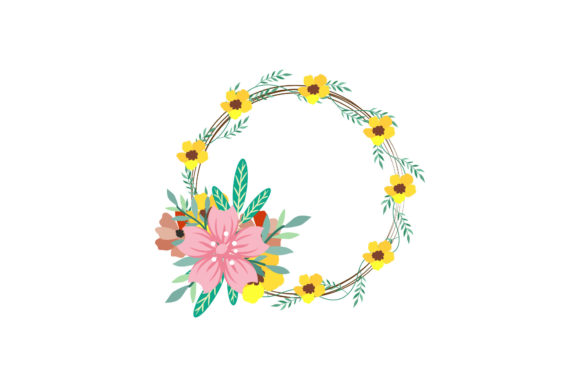
The moment you load Flowers Bright Concept Circle Style into your digitizing software, the first thing that strikes you is the geometry. It is not a chaotic scatter of petals; it is structured. The circular motif suggests unity, wholeness, and focus. For a designer, this is crucial because circular designs naturally draw the eye to the center, making them incredibly effective for branding and focal points. The "bright" aspect of the concept implies high contrast and vibrant energy, which translates well to embroidery when paired with the right thread choices.
In terms of layout, the design feels balanced. It does not scream for attention with excessive detail but rather invites the viewer in. This subtlety is often what separates a mass-produced item from a boutique piece. It feels like a design that belongs in a curated shop, perhaps alongside linen tote bags or soft cotton baby items. It has a gentle, organic feel that works beautifully for handmade product lines that prioritize aesthetics over loud graphics.
Real-World Application: The Tote Bag Scenario
Let’s imagine a real project. You are preparing inventory for an upcoming craft fair or updating your Etsy shop for the holiday season. You decide to create a line of custom embroidered canvas tote bags. These are staple items for Etsy sellers and small business owners alike. You need a design that is recognizable from across the room but detailed enough to justify a higher price point.
Flowers Bright Concept Circle Style fits this scenario perfectly. When centered on a natural canvas bag, the circle acts as a badge or emblem. It allows for clean edges and a professional finish. Unlike complex background fills that might require hours of stitching time and risk puckering thin canvas, this design likely relies on clear outlines and strategic fill areas. This efficiency is vital for commercial embroidery where profit margins depend on speed without sacrificing quality. Imagine pairing this with a simple, bold font below the circle for a name or date. The result is a personalized gift that looks expensive and thoughtfully made.
Expanding Beyond Totes: Apparel and Nursery Items
While totes are a strong candidate, this design’s versatility extends further. Consider sweatshirt embroidery. A circular floral motif placed slightly off-center on the chest of a crewneck sweatshirt creates a relaxed, trendy vibe. It avoids the stiff formality of a left-chest logo while still providing a branded look. Similarly, for baby embroidery, the soft curves of the flowers within the circle are less aggressive than sharp geometric shapes, making it ideal for onesies, bibs, or nursery wall hangings. The design’s adaptability makes it a valuable asset for digital product sellers who want one design that can be marketed across multiple niches.
Technical Performance and Stitch Clarity
When evaluating any machine embroidery design, I always think about the stitches themselves. How will the stitch density hold up? Circular designs often rely on satin stitches for the outer border and fill stitches for the internal elements. If the digitization is good, the transition between these stitch types should be smooth, minimizing jump stitches and reducing the need for trimming.
I suspect Flowers Bright Concept Circle Style performs best on stable fabrics. The clean lines of the circle demand precision. On a textured fabric like heavy denim or a nubby linen, the fine details might get lost, or the needle might struggle to pierce the weave consistently. In such cases, using a proper stabilizer is non-negotiable. A cut-away stabilizer would be my recommendation for woven bags or apparel to ensure the design doesn’t distort after washing. For knit fabrics like t-shirts or baby clothes, a tear-away or water-soluble stabilizer might be preferable to maintain softness, though care must be taken to avoid pulling the fabric.
Where to Exercise Caution
No design is perfect for every surface. I would advise against using this design on highly curved surfaces like baseball caps unless you have a specialized cap frame and experience. The flat plane of the circle may not translate well to the dome of a hat, potentially causing distortion at the edges. Additionally, if you plan to use this on dark fabric, you must consider underlay stitches. Without sufficient underlay, bright threads can sink into dark fibers, losing their vibrancy. Testing thread color contrast is essential here; light pastel threads might disappear on navy blue, whereas white or metallic gold could pop beautifully.
Also, be mindful of small details. If the flower centers are tiny, they may become indistinct blobs after stitching, especially if you are working with lower thread counts or thicker yarn-dyed threads. Always inspect small details before committing to a full production run.
Visual Appeal and Brand Consistency
From a marketing perspective, Flowers Bright Concept Circle Style enhances brand consistency. Circles are universally recognized symbols of community and care. Using this design across various products—kitchen towels, aprons, pillow covers—creates a cohesive visual identity for your shop. Customers trust brands that present a unified aesthetic. When a buyer sees the same circular motif on a tea towel and a matching apron, it signals professionalism and attention to detail.
This design also boosts buyer engagement. In the age of social media, visually balanced designs photograph better. The symmetry of the circle provides a pleasing composition for Instagram posts and Pinterest pins. This inherent photogenic quality can drive traffic to your listings without extra effort. It serves as a versatile design asset that supports both physical sales and digital previews.
Practical Designer Notes for Success
Before you hit the start button on your machine, follow these practical steps to ensure the best outcome:
- Test on Scrap Fabric: Never assume a design will work perfectly on your final material. Run a test stitch on a scrap piece of the exact fabric you plan to use.
- Check Hoop Size: Ensure the design dimensions fit comfortably within your standard hoop sizes. If the design is large, verify that your machine can handle the required reach.
- Review Stitch Density: Look at the digitized file to check for overly dense areas. High density can lead to stiffness and needle breakage. Adjust if necessary.
- Confirm Licensing: Since you are receiving this as a digital embroidery file, double-check the license agreement. Are you allowed to sell finished products? Is there a limit on the number of units? This is critical for craft business owners to avoid legal issues.
- Mockup in Black and White: Convert the design to grayscale to check contrast levels. This helps predict how the different thread colors will interact and ensures legibility.
- Select Proper Stabilizer: Match the stabilizer to the fabric weight and stretch. Heavy fabrics need heavy support; knits need stability without bulk.
Final Verdict
Flowers Bright Concept Circle Style is a solid, versatile choice for designers looking to add a touch of elegance and structure to their projects. It bridges the gap between artistic Illustrations and functional Graphics, offering a design that is both beautiful and manufacturable. Whether you are creating a personalized gift for a friend or building a catalog of small shop products, this design offers the reliability and aesthetic appeal needed to succeed. By paying attention to fabric choice, stabilization, and licensing, you can transform this digital concept into a tangible, high-quality finished product that customers will love.